
Closing the Gap at the Doorstep
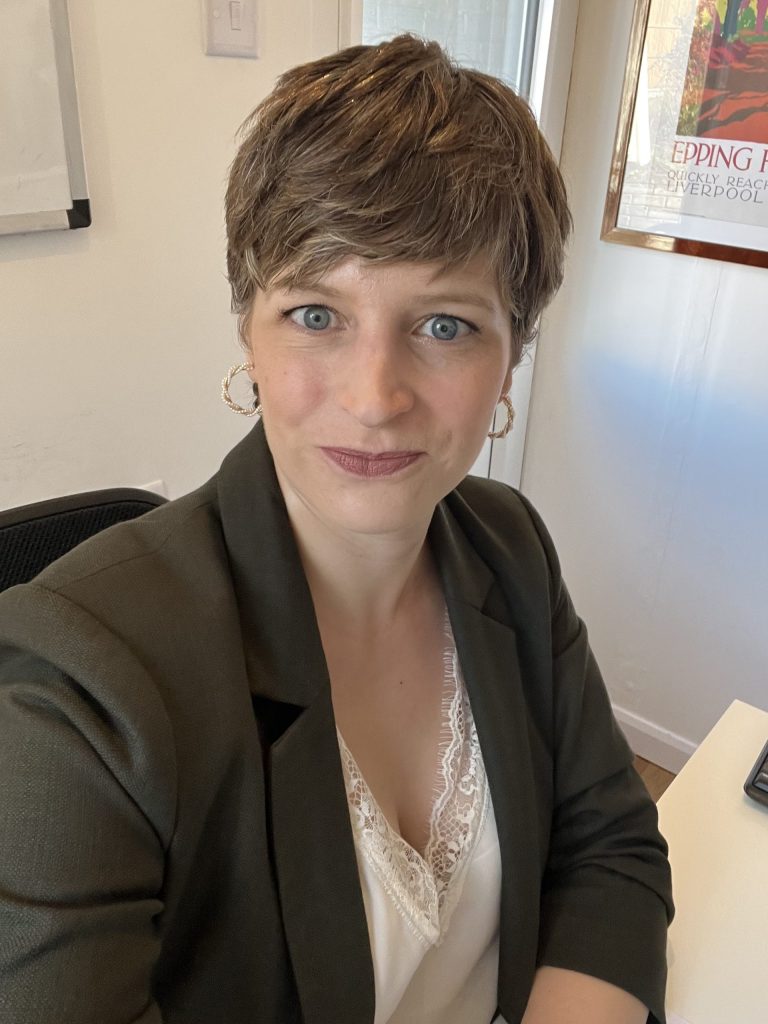
Most people have never met an enforcement agent, yet many feel certain they know what one does. Claire Newell, Director of Communications and Public Affairs at the Civil Enforcement Association (CIVEA), explains how she aims to change that story in the media and in government.
Interview by Dennis Larsen, Managing Director, Linq Advisors and EACD Board Member
Few professions carry a heavier reputational inheritance than the bailiff. Television has long cast enforcement agents as the people who force their way into homes and remove possessions. The reality, according to Claire Newell, is very different: court-certificated agents, trained to recognise vulnerability, who are often the first to notice that the person at the door needs help.
Newell joined CIVEA in the summer of 2026. CIVEA represents around 40 firms in England and Wales that recover about £1 billion a year for public services, mainly for local authorities. With a secretariat of three and support from PR and public affairs agencies, she faces a public story shaped largely by people who have never seen the work firsthand.
Where does the reputation gap come from?
“We have just published research called At the Doorstep, which asked the public how often they think goods are taken during a visit. The average answer was somewhere between 41 and 50%. In reality, it is about 1%. Only around 19% of people have ever met an enforcement agent. Most get their information from outdated TV and media portrayals.”
“Those portrayals have a material impact. We believe they contribute to threats and violence against agents who are authorised by a court to do their job, and who should be able to do it safely.”
How do you begin to change that perception?
“We are humanising the profession and telling the stories of the regular people doing these jobs. They are highly trained, much of it around vulnerability, and they are often the first to identify that someone is struggling. In 2024 that was around 350,000 people who were previously unknown by the local authority to be vulnerable.”
“Scaremongering about stereotypes that no longer exist stops people seeking help. The enforcement agent may be the first person who can see your situation and work out a plan with you.”
You do not yet measure reputation. What does success look like?
“We are developing a reputation measurement framework but we need to be represented in the conversations that shape public understanding.
It doesn’t have to be a big shift in coverage or even favourability. We simply need a seat at the table and opportunity to provide balance and context.”
How does the public affairs work connect with that?
“We work closely with the Ministry of Justice and other stakeholders across the sector. This summer our CEO wrote a joint letter with the High Court Enforcement Officers Association, proposing that everyone working in the sector be accredited by independent oversight body, the Enforcement Conduct Board. The government took our recommendation. Partnerships like that definitely make us more effective.”
“Our president, Amy Collins, has set three priorities for her tenure: better perceptions of the industry, a new fee review mechanism with regular reviews, and preparedness for statutory regulation. CIVEA has already been instrumental in the establishment of the Enforcement Conduct Board and we continue to collaborate across the stakeholder landscape with the ultimate aim of statutory regulation.”
How do you speak with one voice for 40 members?
“There is more alignment than you might expect, because fees are set by government and although it is a highly competitive sector, members face the same pressures in this respect. Our president, who serves a two-year term, also brings the member voice to our communications and as with any member association, we are mindful of never privileging one or two members over the others.”
Where does AI fit in a team of three?
“I use AI for research, planning and some content generation but authenticity remains critical. Our voice has to be genuinely ours. Our members are also innovating and the use of AI-driven tools is also helping improve areas such as monitoring of standards and training of enforcement agents, for example.”
Which stories will change minds?
“A member told us about an enforcement agent who visited a home where someone was living in very challenging circumstances and clearly could not repay the debt. Afterwards, of his own accord, he bought groceries and pet food and took them back to the house. He told his employer: ‘I have to leave a situation better than I found it’. That is so far removed from what people imagine to be the reality of enforcement.”
“We are looking at ways to bring more of these stories to light as part of the ongoing effort to challenge stereotypes and humanise the profession.”
What will you have achieved a year from now?
“A redeveloped website, a stronger pipeline of regular content and much greater engagement on LinkedIn. For the sector, progress on the fee review mechanism and a continued involvement in the conversation about statutory regulation.”
Building from the foundations
Newell’s brief is a familiar one for communicators who inherit a reputation they did not shape. She is building on the existing CIVEA foundations, with evidence, owned channels and a disciplined public affairs agenda, then using real stories to maintain a place in conversations that used to happen without the sector. Her measure of progress is modest and sharp: CIVEA having a voice in even the most challenging conversations, ahead of universal approval. The agent who returned with groceries set out a principle any communication architect could adopt – leave the situation better than you found it.