EACD Switzerland – The Evolution and Future of Corporate Communications – Nestlé CCO Lisa Gibby Sharing Her Thoughts and Plans
Nestlé is the world’s largest food and beverage company with over 2000 brands and a presence in more than 180 countries. This makes it part of the every-day life of millions of people. Much more than many other companies, Nestlé is closely watched. How do you manage global corporate communications in times of polycrisis and when you are always in the limelight?
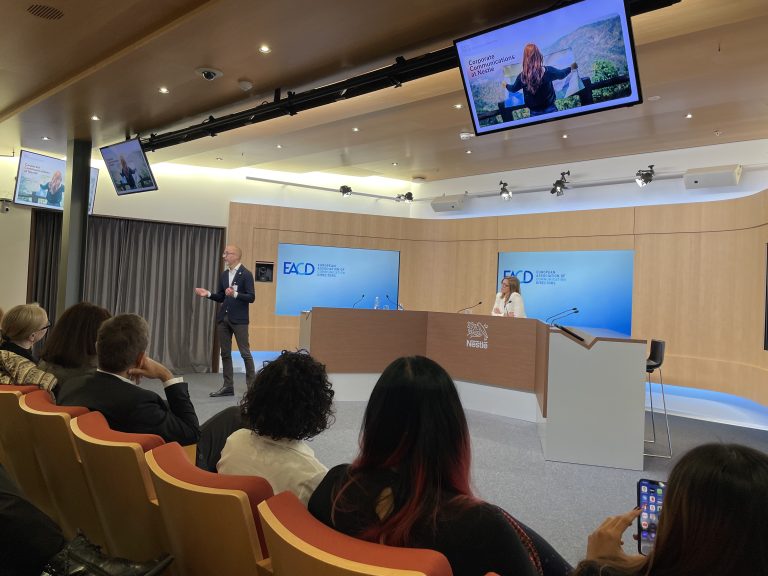
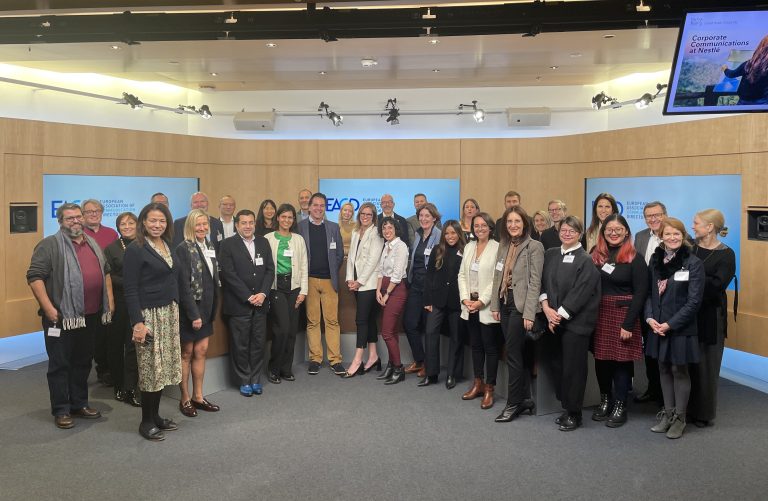
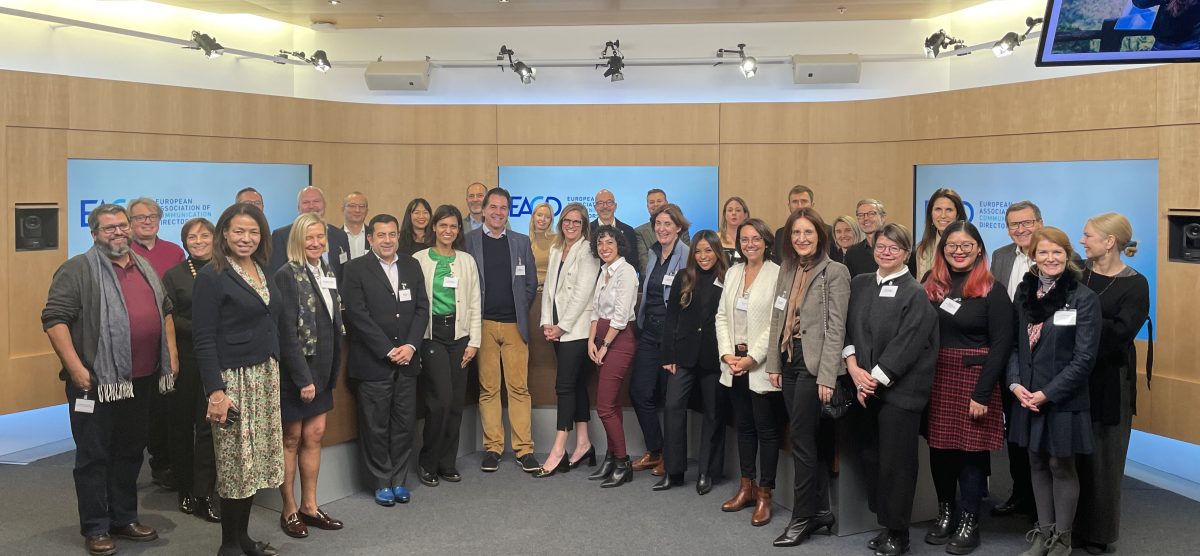
In a dialogue with EACD Swiss Chapter lead Axel Schafmeister and lively discussion with over 30 communications leaders attending the event at the company’s global headquarters in Vevey (Switzerland), Nestlé’s Chief Communications Officer Lisa Gibby shared insights into how she and her team handles the multi-faceted complexity of the job.
- On communications in times of polycrisis: Lisa explained that in the face of polycrisis, it is essential not to react to every new crisis, but rather increase focus to stay on track of your mission.
- On managing complexity and being consistent in messaging to a great variety of audiences across different parts of the world: Nestlé’s Corporate Communications aims for one core narrative globally, which can be adapted for local relevancy. Digital and data insights play an important role in its content development and storytelling.
- On the relevance of media relations in times when there are fewer and fewer journalists and media: Lisa pointed out that in Nestlé’s global corporate communications, personal relationships with journalists remain key; media relations are considered an indispensable core part of Nestlé’s corporate communications.
- On CEO positioning and leadership communications: Lisa elaborated that what counts is for the CEO to be authentic. In Nestlé’s case, this is related to environmental and food topics, as this is also linked to the company’s business.
- On working her way up from Head of US Corp Comms to global CCO with a seat on Nestlé’s Executive Board: Lisa pointed out that the value proposition of Nestlé’s Corporate Communications is to contribute to the business success and value creation of the company. She explained that the Executive Board needs to be convinced that having corp comms on the board helps avoid the reactive fire-fighting mode, and that a contribution to the value creation of the company can only be achieved by being present during these key discussions.