
Trust, Risk and Resilience: Where Are We Now and Where Next?
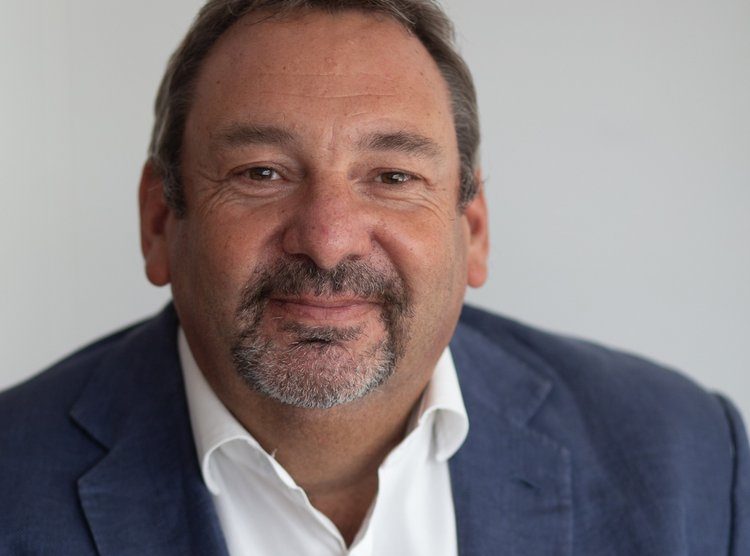
By Rod Cartwright, Principal at Rod Cartwright Consulting.
The topic of this year’s EACD Summit in Brussels was “What the World Needs Now: Creating security, stability, and resilience in an unpredictable world”.
So, as organisations grapple with what the Centre for Creative Leadership has termed our RUPT world (rapid, unpredictable, paradoxical and tangled), it felt timely to share some thoughts on a report I released earlier this year called ‘Trust, Risk and Resilience: Where are we Now and Where Next?’.
In it, I summarised and analysed the five key, global reports exploring the state of risk and trust, released pre-Davos, by The World Economic Forum, Edelman, Ipsos, The Conference Board and The Page Society. I included a ‘TL;DR’ summary and two-three page overview for each report, together with ten overall conclusions and ten practical recommendations for action. So, what did I conclude?
On the one hand, the analysis reveals a wall of interconnected economic, geopolitical, environmental and structural risks. Taken together, these risks contribute to a deepening sense of political polarisation, social division and economic inequity.
On the other, there is a widespread realisation that a commitment to consistency, transparency, responsibility and truly putting people first holds the key to making an ESG-centred approach to stakeholder capitalism a success. And yet, for all the awareness of this acute risk environment, many organisations still lack a systematic approach to risk mitigation, crisis preparedness and resilience-building.
Dipping into the detail, I found ten ‘red thread’ conclusions running through the five reports:
- All organisations should place the highly personal, human impact of the cost-of-living crisis on employees, customers and communities at the heart of their strategy.
- Business is increasingly expected to stand up and speak out on societal issues of the day, actively tackling political polarisation, social division and economic inequity.
- The existential threat posed by the climate emergency is the issue of today and tomorrow, making proactive involvement in this central challenge non-negotiable.
- Fostering trusted internal and external relationships should be a cornerstone of every organisation’s approach, with one eye firmly on consistency, transparency and responsibility.
- Being fully alive to varying forms of potential geopolitical conflict – and preparing accordingly – should be a critical element in the assessment of key risks and opportunities.
- Considering how to recruit, retain and engage a genuinely diverse, inclusive workforce will be a hallmark of those organisations that survive and thrive.
- With stakeholder capitalism universally viewed as the bedrock of the global economy, truly embedding ESG and stakeholder value will be a form of invaluable differentiation.
- Businesses should only speak out on major issues of the day when doing so is in line with their specific business, reputational and brand strategies.
- The growing ‘intersectionality’ of risk means that factoring in the interplay and mutual reinforcement of risks will be ever-more essential in quantifying, qualifying and prioritising risk scenarios.
- CEOs feel woefully underprepared for major sources of risk, making a systematic, measurable approach to crisis preparedness a centrepiece of corporate resilience, performance and valuation.
Drawing on those conclusions, I also shared ten practical recommendations – in the form of ten provocative questions – for managing the risks and capitalising on the opportunities in play. In brief summary:
- Trust is as much about relationships as reputation: As you work to foster trust, are you focusing on building and maintaining positive, lasting relationships, rather than obsessing with reputation alone?
- Crisis as a turning point, not a disaster: Does your crisis preparedness consider the potential positives of critical situations, as well as the downside risks, including a proper ‘lessons learned’ review process?
- Risk management and organisational preparedness is a team sport: Is your approach to reputation risk management and preparedness a genuine whole-team exercise, across the entire organisation?
- Focus on real-world scenarios, not paper risks: Are you systematically and imaginatively preparing for potential real-world scenarios, not just mapping paper risks?
- Organisational resilience depends on human preparedness: Is the development of genuine human preparedness a centrepiece of your approach to risk management and resilience-building?
- You are defined not by the behaviours you promote, but those you tolerate: What steps are you taking – operationally and culturally – to avoid damaging ‘say-do’ gaps that can erode trust?
- Listen first and then lead: Do you have the listening systems, processes and mindset in place to understand your key audiences’ human needs, wants, values and beliefs – internally and externally?
- Trust is everything, everywhere, all at once: Are you considering trust and delivering leadership at every level of – and through every touchpoint with – the organisation?
- Speak up fearlessly, but thoughtfully: As part of your trust armoury, do you have a clear process for qualifying which issues are right to address publicly – whether proactively or reactively – in a way that avoids creating damaging dissonance?
- No plan of action survives first contact with the enemy: Have you put your full, integrated team through the pressure of a real-time crisis simulation, to assess strengths and areas for development?
While there are no quick fixes or overnight answers, the conclusions and practical recommendations in Trust, Risk and Resilience will hopefully help organisations of all kinds to mitigate risk, enhance preparedness, develop resilience and build sustained trust.
Rod Cartwright is principal at Rod Cartwright Consulting, Chair of EACD’s Expert Group on Crisis & Risk Communication, Special Advisor to CIPR’s Crisis Communications Network and a Visiting Fellow at Cardiff University.